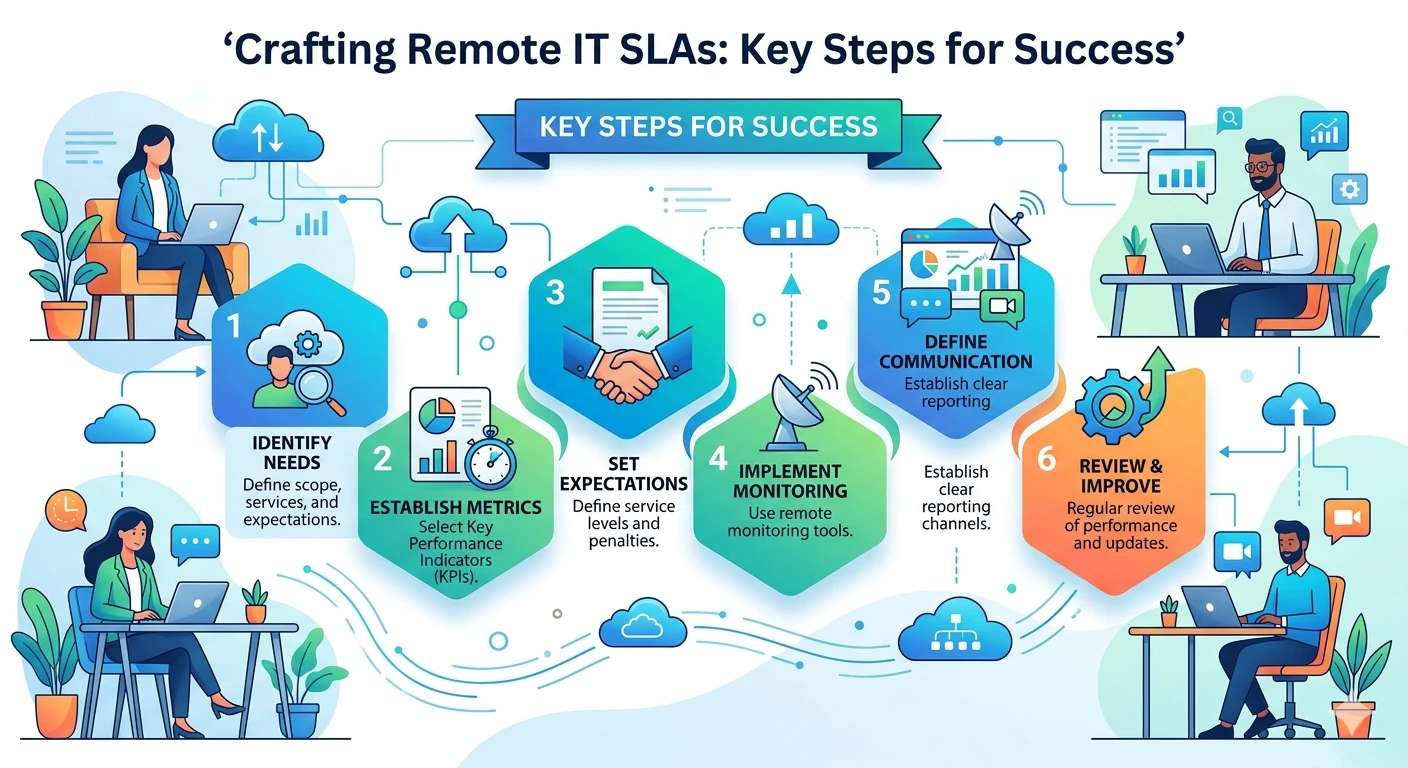
For remote IT services, a well-defined Service Level Agreement (SLA) ensures clarity, accountability, and trust between your business and your provider. At Skynordics, we help clients create SLAs tailored to their specific needs across web development, cybersecurity, cloud computing, and more. Here are the essential elements to include in your remote IT SLA.
- Define Scope and Responsibilities: Clearly outline which IT services are covered (e.g., help desk support, database management, virtualization) and who is responsible for what. This prevents misunderstandings and sets realistic expectations.
- Establish Performance Metrics: Specify measurable targets like uptime percentage (e.g., 99.9%), average response time, and resolution time. Align these with your business priorities—critical for remote operations.
- Include Escalation Procedures: Detail the steps for handling unresolved issues, including contact points and timelines. This ensures that problems are escalated promptly before they impact your operations.
- Set Security and Data Privacy Terms: With remote access, cybersecurity is paramount. The SLA should outline compliance with standards (e.g., GDPR, ISO 27001), data encryption requirements, and breach notification procedures.
- Plan for Regular Reviews: An SLA is a living document. Schedule quarterly reviews to update metrics based on changing needs or service performance, ensuring continuous improvement.
By incorporating these elements, your remote IT SLA becomes a powerful tool for maintaining service quality and business continuity. Need expert guidance? Skynordics offers comprehensive IT consulting to help you build and manage effective SLAs.
Comments: